
- Journey Through Polynesia covers five Pacific cultures — Hawaiʻi, Tahiti, Samoa, Fiji and Aotearoa — plus the fireknife finale.
- Hula ʻauana is the modern, flowing style; the hands carry the meaning.
- Tahitian ʻori is faster and drum-driven — the most immediately recognisable shift in the show.
- Samoan slap dance (faʻataupati) uses the body itself as the percussion instrument.
- Māori poi spins tethered weights in interlocking rhythmic patterns.
- The fireknife (siva afi) descends from a Samoan weapon dance, not from Hawaiian tradition.
Quick Answer
Journey Through Polynesia is the revue performed at Huakaʻi Lūʻau, covering five Pacific cultures in one evening: Hawaiian hula ʻauana, Tahitian ʻori, Samoan slap dance (faʻataupati), Fijian meke and Māori poi, closing with the Samoan fireknife (siva afi). Each is a distinct tradition with its own instruments and rhythm rather than a regional variation on one dance.
Why a revue rather than a single-culture show
Polynesia is not one culture. It is a vast triangle of island societies linked by ancestry, navigation and trade, and separated by thousands of miles of open ocean. The dances that developed across it are genuinely different from one another — in tempo, in instrumentation, and in what the movement is for.
Presenting them in sequence makes those differences legible in a way that a single-culture programme cannot. You hear the shift when the Tahitian drums start.
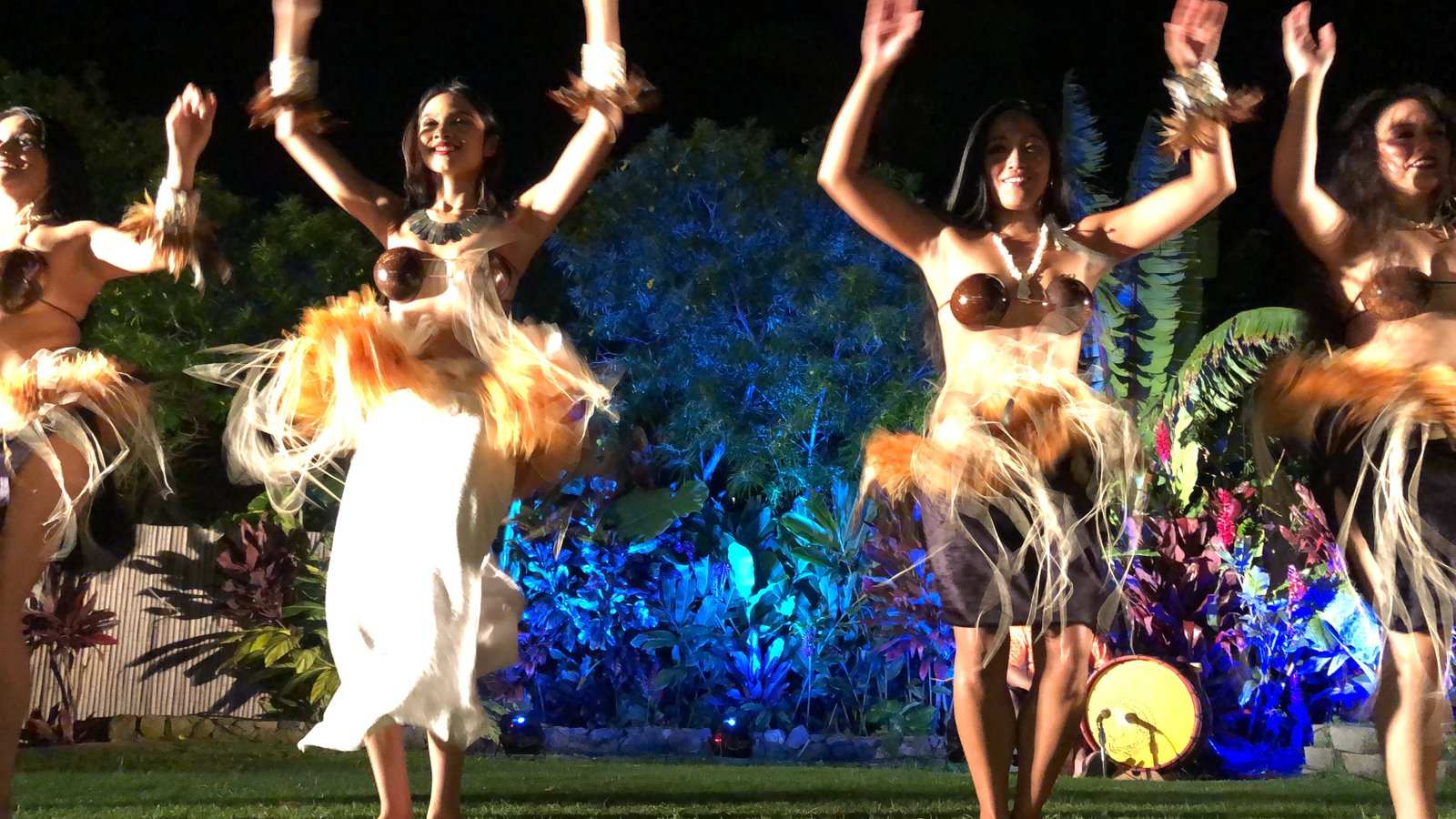
The six segments
Hawaiian hula ʻauana
ʻAuana means to wander or drift — the modern style, developed after Western contact, accompanied by melodic instruments such as guitar and ʻukulele. It is distinguished from hula kahiko, the older form accompanied by chant and percussion. In both, the hands carry the narrative; the story is told in gesture.
Tahitian ʻori
From the Society Islands. Faster, driven by the tōʻere slit drum, and built on rapid hip movement. This is usually the moment the audience realises the show has changed countries.
Samoan slap dance — faʻataupati
A male tradition in which the body is the instrument: the dancers strike their own arms, chest and thighs to build interlocking percussive rhythms, typically without any external drum.
Fijian meke
Meke covers a family of Fijian song-and-dance forms that carry story and genealogy — including the warrior forms most often presented on stage.
Māori poi
From Aotearoa (New Zealand). Tethered weights are swung in precise, interlocking patterns, the sound of the poi striking the hands forming part of the rhythm.
The fireknife — siva afi
The finale, and a common point of confusion: the fireknife is Samoan, not Hawaiian. It descends from the nifo oti, a Samoan weapon dance; setting the blade alight is a twentieth-century development. It closes the show for the obvious reason.
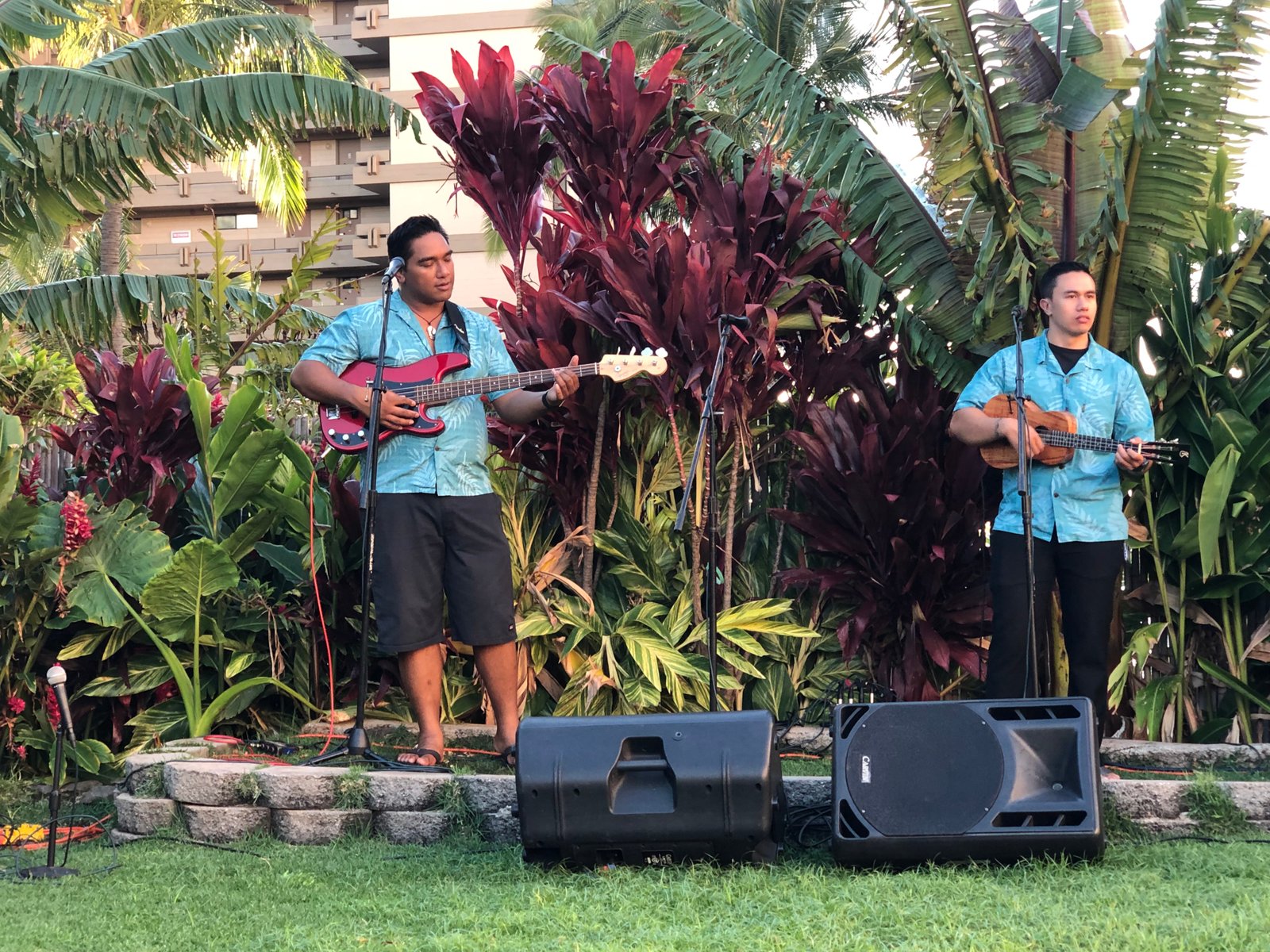
What to listen for
| Segment | Origin | Listen for |
|---|---|---|
| Hula ʻauana | Hawaiʻi | Melodic — guitar and ʻukulele; hands carry the story |
| Tahitian ʻori | Society Islands | The tōʻere slit drum; rapid tempo |
| Faʻataupati | Samoa | Percussion made entirely by the body |
| Meke | Fiji | Group chant and narrative song |
| Poi | Aotearoa | The poi striking the hands, in rhythm |
| Siva afi | Samoa | The blade — and the crowd |
Seeing it
The revue runs weekly on Tuesdays on the Luau Lawn at Kāʻanapali Beach Club. The main show begins at 6:30 PM and closes with the fireknife at 7:30 PM, followed by a cast meet-and-greet.
| Time (Apr–Sep) | What happens |
|---|---|
| 5:30 PM | Doors open on the Luau Lawn |
| 5:45 PM | Pre-show begins — live music and cultural welcome |
| 5:50 PM | Dinner buffet opens |
| 6:20 PM | Pre-show ends |
| 6:30 PM | Main show — Polynesian revue with live band |
| 7:30 PM | Fireknife grand finale |
| 7:30–7:45 PM | Cast meet-and-greet |
October through March, every time above shifts 30 minutes earlier — doors at 5:00 PM.
Related reading
For the hula tradition specifically, see our guide to hula. For the practical side of attending, see tickets and pricing and the venue guide.
Frequently asked questions
What is Journey Through Polynesia?
Journey Through Polynesia is the revue performed at Huakaʻi Lūʻau on Maui. Rather than presenting Hawaiian material alone, it moves through five Pacific cultures in one evening — Hawaiian hula ʻauana, Tahitian ʻori, Samoan slap dance, Fijian meke and Māori poi — and closes with the Samoan fireknife dance.
Is the fireknife dance Hawaiian?
No. The fireknife, or siva afi, is Samoan. It descends from the nifo oti, a Samoan weapon dance, and the practice of setting the blade alight is a twentieth-century development. It is widely performed at luaus across Hawaiʻi as a finale, but its origin is Samoan rather than Hawaiian.
What is the difference between hula kahiko and hula ʻauana?
Hula kahiko is the older form, accompanied by chant and percussion instruments such as the pahu drum and ipu gourd. Hula ʻauana is the modern style that developed after Western contact, accompanied by melodic instruments such as guitar and ʻukulele. In both forms the hands carry the narrative.
What is Samoan slap dance?
Faʻataupati is a Samoan male dance in which the performers use their own bodies as the percussion instrument, striking their arms, chest and thighs to build interlocking rhythms, typically without any external drum.
What time does the Huakaʻi Lūʻau show start?
From April through September, doors open at 5:30 PM, the buffet opens at 5:50 PM, the main show begins at 6:30 PM and it ends at 7:30 PM with the fireknife finale. From October through March every time shifts 30 minutes earlier, so doors open at 5:00 PM. The show runs on Tuesdays.
What day of the week is Huakaʻi Lūʻau?
Huakaʻi Lūʻau performs weekly on Tuesdays at the Luau Lawn at Hilton Grand Vacations Kāʻanapali Beach Club. Because it is a weekly rather than nightly show, a one-week stay on Maui usually overlaps with only one or two performance dates, so it is worth checking the calendar against your travel dates as early as possible.
See the Journey for Yourself
Huakaʻi Lūʻau · The Luau Lawn at Hilton Grand Vacations Kāʻanapali Beach Club
104 Kāʻanapali Shores Place · Lāhainā, HI 96761
Performing weekly on Tuesdays
Pricing, showtimes and menu items are current as of August 2026 and are subject to change; taxes are additional at checkout and menu offerings may vary with seasonal availability and operational requirements. Price ranges quoted for other Maui luaus are general market guidance rather than quotes — confirm current pricing directly with each operator. Seating within each ticket tier is first-come, first-served.