
- Hula is narrative. The gestures are vocabulary, not decoration.
- Hula kahiko is the older form — chant and percussion. Hula ʻauana is the modern form — melody, guitar and ʻukulele.
- The mele (song or chant) is the text; the dance is the interpretation of it.
- Public hula was suppressed under 19th-century missionary influence and revived publicly under King David Kalākaua.
- The Merrie Monarch Festival in Hilo, named for Kalākaua, is the tradition's most significant modern competition.
- A hālau is a hula school; a kumu hula is its teacher — a serious lineage role, not a job title.
Quick Answer
Hula is a Hawaiian dance tradition in which the movement interprets a mele — a song or chant — with the hands carrying the narrative. It exists in two broad forms: hula kahiko, the older style accompanied by chant and percussion instruments such as the pahu drum and ipu gourd, and hula ʻauana, the modern style accompanied by melodic instruments. Public performance was suppressed under 19th-century missionary influence and revived under King David Kalākaua.
It is a language, not a decoration
The central thing visitors miss is that hula is interpretive. A mele — a chant or song — supplies the text. The dance renders it. Gestures for rain, for the sea, for longing, for a particular wind in a particular valley are established vocabulary, and a dancer performing them is closer to a reciter than to a performer improvising to music.
This is why the phrase a language with no words keeps attaching itself to hula. The words exist. They are simply not spoken by the dancer.
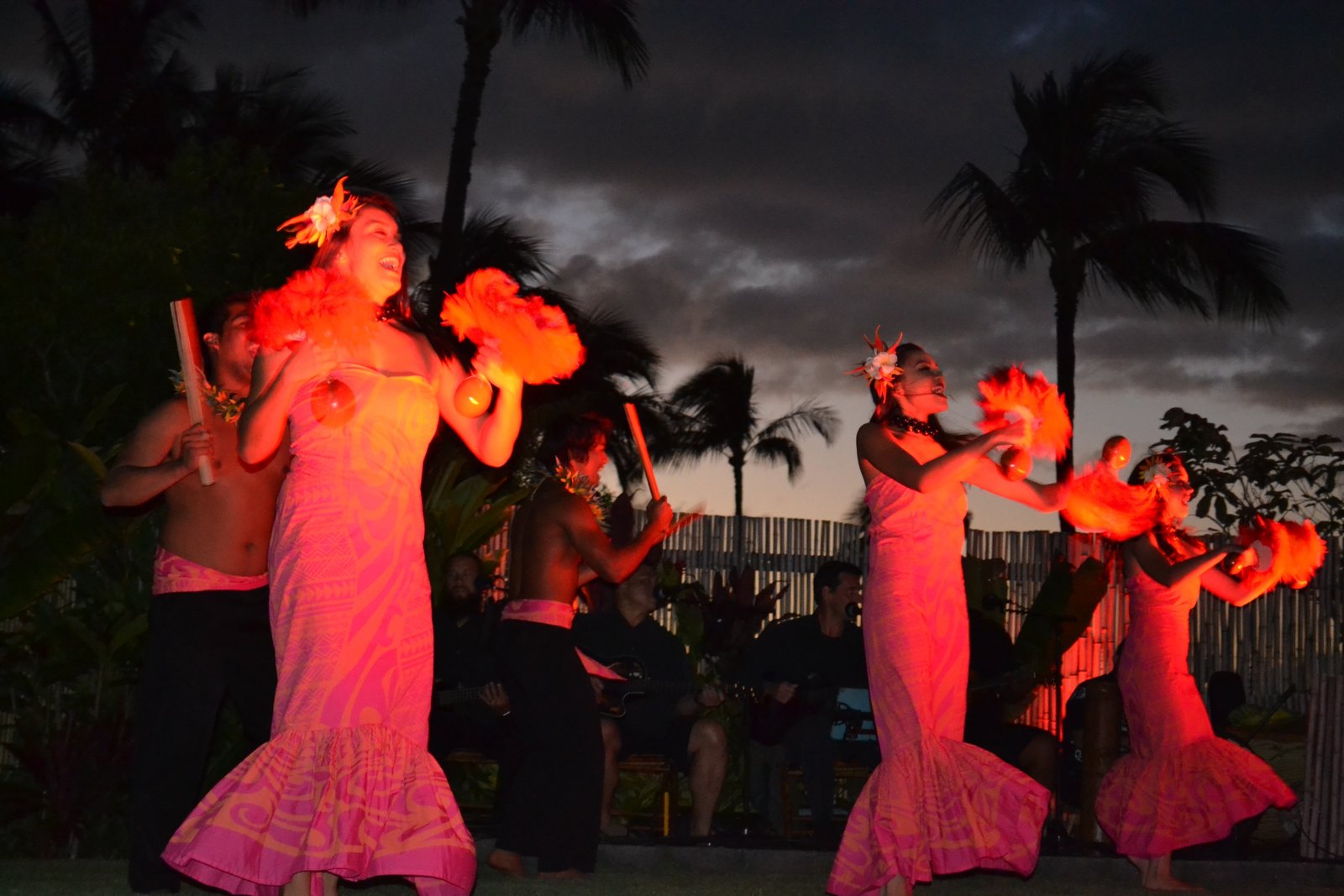
Kahiko and ʻauana
| Hula kahiko | Hula ʻauana | |
|---|---|---|
| Era | Pre-contact tradition | Post-contact, modern |
| Accompaniment | Oli (chant) and percussion | Melodic — guitar, ʻukulele, bass, voice |
| Instruments | Pahu drum, ipu gourd, ʻiliʻili stones | Stringed instruments and voice |
| Feel | Grounded, percussive, formal | Flowing, melodic, lyrical |
| Attire | Traditional materials | Often modern dress |
Kahiko means ancient; ʻauana means to wander or drift. Neither is a lesser form. They are different registers of the same tradition, and most hālau train in both.
A history that matters to how you watch it
Hula was central to Hawaiian religious and social life before Western contact. Following the arrival of Protestant missionaries in the 1820s, public performance was discouraged and suppressed as part of a broader campaign against Hawaiian practice. The tradition survived — privately, and through the hālau.
King David Kalākaua, who reigned from 1874 to 1891, deliberately restored hula to public and ceremonial life. He is remembered as the Merrie Monarch, and the Merrie Monarch Festival held annually in Hilo — the most significant hula competition in the world — carries his name.
The Hawaiian Renaissance of the 1970s brought a further, broader revival of language, navigation and hula together.
Why this matters at a luau. Hula performed for visitors sits inside that history. Watching attentively — and not treating the dancers as scenery — is the difference between an audience and a crowd.
How to watch it
- Watch the hands. That is where the text is.
- Listen for the mele. Even without the language, the phrasing tells you where you are in the story.
- Notice the shift between kahiko and ʻauana if both are performed — the instruments change first.
- Applaud at the end, not through it.
- Ask. At Huakaʻi Lūʻau the cast stays for a meet-and-greet after the finale, which is the moment to ask what a mele was about.
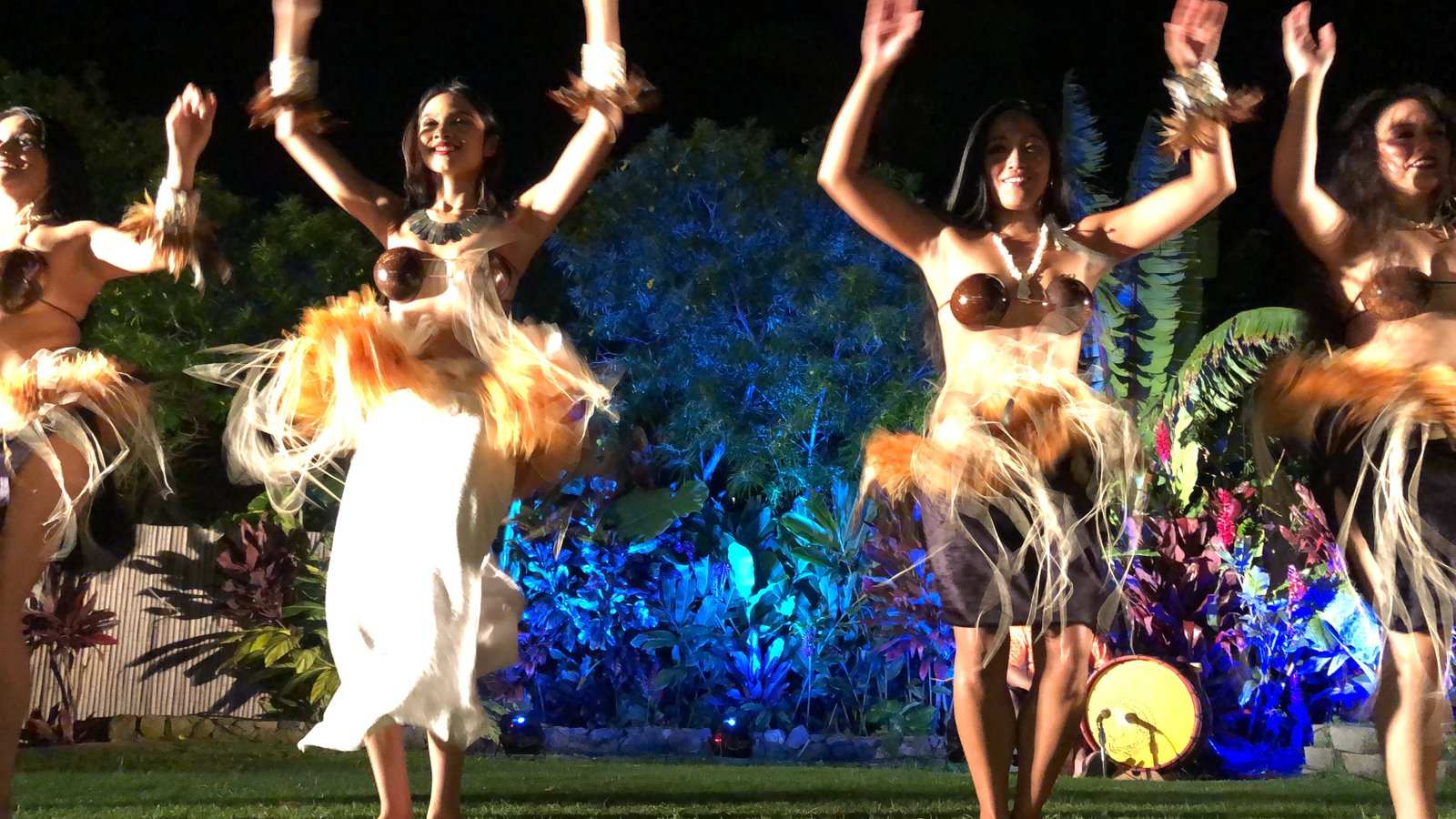
Terms worth knowing
- Mele — the song or chant the dance interprets
- Oli — chant, performed without dance
- Hālau — a hula school
- Kumu hula — the teacher and lineage-holder of a hālau
- Pahu — sharkskin-headed drum used in kahiko
- Ipu — gourd used for percussion
Where to see hula on Maui
Huakaʻi Lūʻau performs hula ʻauana as part of Journey Through Polynesia, weekly on Tuesdays at Kāʻanapali Beach Club. Practical details are in the ticket guide and the venue guide.
Frequently asked questions
What does hula actually mean?
Hula is a Hawaiian dance tradition that interprets a mele — a song or chant — through movement, with the hands carrying the narrative. Gestures for natural features, emotions and places are established vocabulary, so a hula performance is closer to reciting a text than to dancing to music.
What is the difference between hula kahiko and hula ʻauana?
Hula kahiko is the older, pre-contact form, accompanied by chant and percussion instruments such as the pahu drum and ipu gourd, and is grounded and formal in feel. Hula ʻauana is the modern form that developed after Western contact, accompanied by melodic instruments such as guitar and ʻukulele, and is more flowing and lyrical. Most hālau train in both.
Was hula ever banned in Hawaii?
Public performance of hula was discouraged and suppressed following the arrival of Protestant missionaries in the 1820s, as part of a wider campaign against Hawaiian practice. The tradition survived privately and through hālau, and King David Kalākaua deliberately restored it to public and ceremonial life during his reign from 1874 to 1891.
What is the Merrie Monarch Festival?
The Merrie Monarch Festival is an annual hula competition held in Hilo on Hawaiʻi Island, and the most significant event in the hula world. It is named for King David Kalākaua, who was known as the Merrie Monarch and who restored hula to public life in the late nineteenth century.
Can you see hula at a Maui luau?
Yes. Hula ʻauana is performed at Huakaʻi Lūʻau as part of the Journey Through Polynesia revue, weekly on Tuesdays at the Luau Lawn at Hilton Grand Vacations Kāʻanapali Beach Club. The cast stays for a meet-and-greet after the finale, which is a good opportunity to ask about the mele.
See Hula on Kāʻanapali Beach
Huakaʻi Lūʻau · The Luau Lawn at Hilton Grand Vacations Kāʻanapali Beach Club
104 Kāʻanapali Shores Place · Lāhainā, HI 96761
Performing weekly on Tuesdays
Pricing, showtimes and menu items are current as of August 2026 and are subject to change; taxes are additional at checkout and menu offerings may vary with seasonal availability and operational requirements. Price ranges quoted for other Maui luaus are general market guidance rather than quotes — confirm current pricing directly with each operator. Seating within each ticket tier is first-come, first-served.