
- All Hawaii beaches are public up to the high-water line, including the ones fronting resorts.
- Parking is the real constraint. Public beach-access lots are small and fill early; resort lots commonly charge $20–$35.
- West-facing (Kāʻanapali, Lāhainā, Nāpili) = sunset in front of you.
- South (Kīhei, Wailea, Mākena) = generally calmer, often better for young children.
- Mornings are calmest almost everywhere — wind builds through the afternoon.
- Black Rock (Puʻu Kekaʻa) is the best shore snorkel on the west side.
Quick Answer
Every beach in Hawaii is public up to the high-water line, including those fronting resorts — the practical constraint is parking, not access. Choose by aspect and conditions: West Maui (Kāʻanapali, Nāpili, Lāhainā) faces the sunset and has the best shore snorkelling at Black Rock; South Maui (Kīhei, Wailea, Mākena) is generally calmer and better for young children. Mornings are calmest almost everywhere.
Choose by what you actually want
| If you want… | Go | Why |
|---|---|---|
| Sunset in front of you | West Maui — Kāʻanapali, Nāpili | The whole coast faces west; the beach walk runs the length of Kāʻanapali |
| Shore snorkelling | Black Rock (Puʻu Kekaʻa), Kāʻanapali | Fish gather along the lava face; easy entry from the sand |
| Calm water with young children | South Maui — Kīhei, Wailea | Generally more sheltered, with shallower entries |
| Space and fewer people | Further south, or further north | The resort cores are the busiest stretches by a wide margin |
| A paved coastal walk | Kāʻanapali or Wailea | Both have well-made shoreline paths linking resorts and dining |
The parking problem, plainly
Hawaii law guarantees public access to every beach, and every resort has public beach-access parking. Those lots are small and they fill early — often well before mid-morning in peak season. Resort self-parking is usually available at $20–$35 for the day.
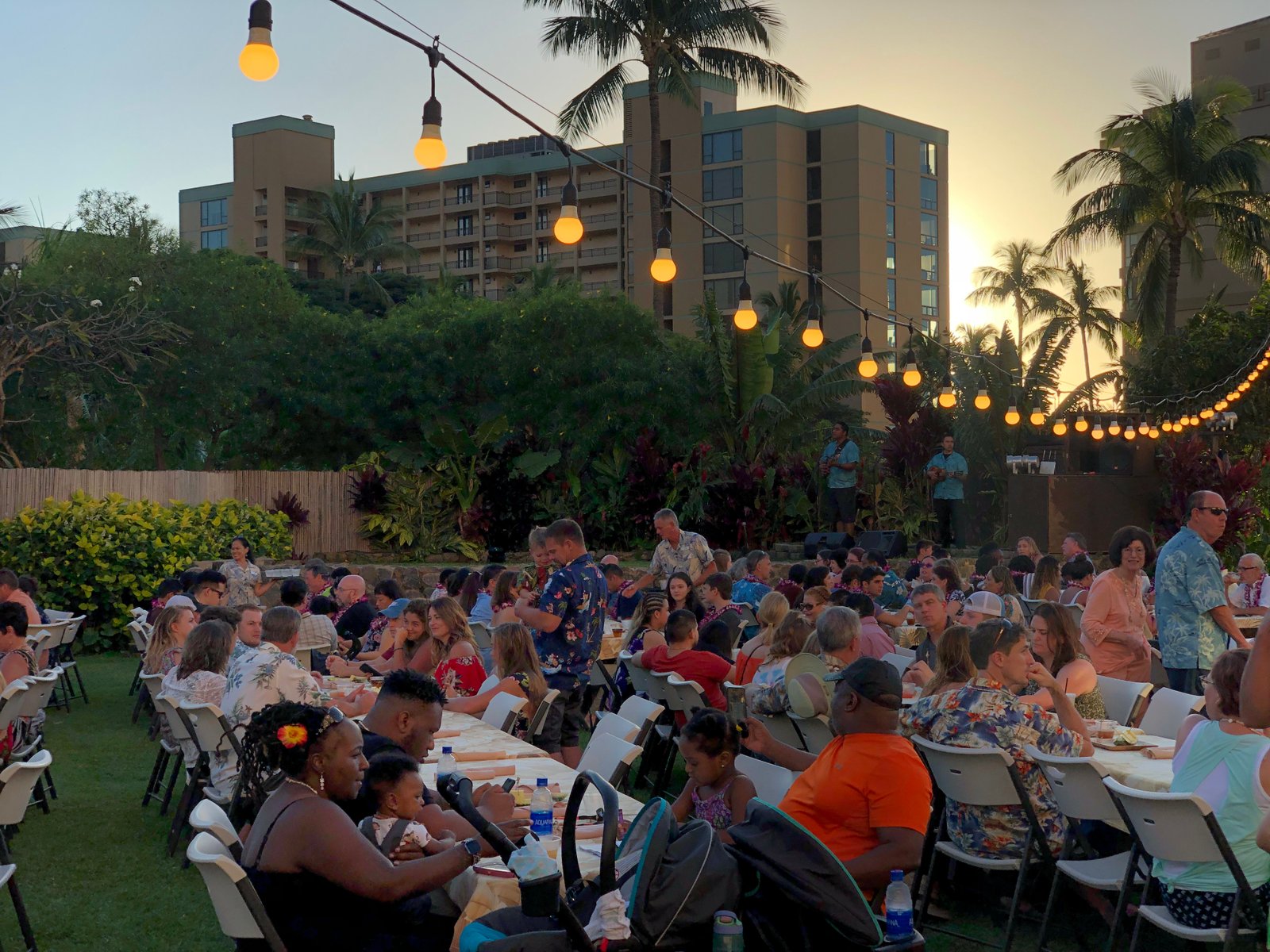
Two practical consequences: arrive early, and when you are comparing evening activities, check whether parking is included — it frequently is not. It is included at Huakaʻi Lūʻau.
Conditions change daily. Surf, current and visibility vary by beach, day and season. Check posted signage, ask a lifeguard, and never rely on a guide written months earlier — including this one — to decide whether to enter the water.
Sharing the beach
- Green sea turtles (honu) and Hawaiian monk seals are protected. Keep well back; never touch or crowd them.
- Reef-safe sunscreen. Hawaii restricts sunscreens containing oxybenzone and octinoxate — bring a mineral (zinc oxide) product.
- Don't stand on coral. It is alive, and it is slow to recover.
- Take everything out with you, including the bits that blew down the sand.
The Kāʻanapali Beach guide goes deeper on the west side, and things to do on Maui puts the beaches in the context of a whole trip.
Frequently asked questions
Are Maui beaches public?
Yes. All beaches in Hawaii are public up to the high-water line, including those fronting resorts, and every resort area must provide public beach access. The practical constraint is parking rather than access — public beach-access lots are small and tend to fill well before mid-morning in peak season.
What is the best beach on Maui for snorkelling?
On the west side, Black Rock — Puʻu Kekaʻa — at the northern end of Kāʻanapali Beach is the best-known shore snorkel, with fish gathering along the lava face and straightforward entry from the sand. Go in the morning, when wind and water clarity are usually best, and always check posted conditions on the day.
Which side of Maui has calmer beaches?
South Maui — Kīhei, Wailea and Mākena — is generally more sheltered and often better for young children, while West Maui faces the sunset and has the better shore snorkelling. Conditions on both coasts are typically calmest in the morning, before the trade winds build.
Do you have to pay to park at Maui beaches?
Public beach-access parking is free but limited and fills early. Resort self-parking is widely available and commonly costs $20 to $35 for the day. If you are attending an evening event on a resort beach, check whether parking is included — at Huakaʻi Lūʻau it is.
Is a Maui luau worth it for families with kids?
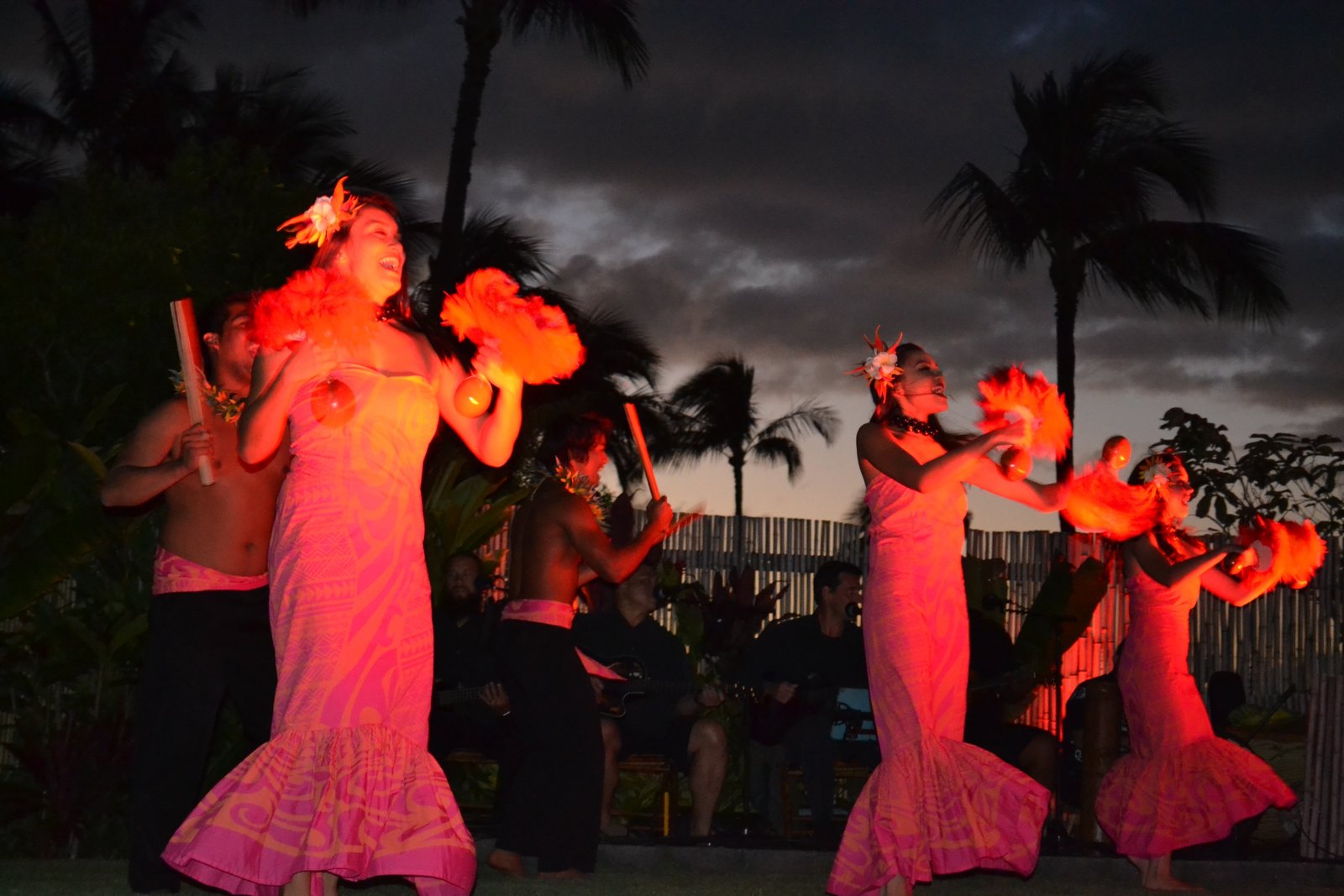
Yes, for most families. Huakaʻi Lūʻau runs a dedicated kids' buffet alongside the main line, prices children 6 to 12 at 40 percent of the adult ticket, admits infants 0 to 5 free, and ends the main show by 7:30 PM so younger children are not out too late. The cast also stays for a meet-and-greet from 7:30 to 7:45 PM.
What day of the week is Huakaʻi Lūʻau?
Huakaʻi Lūʻau performs weekly on Tuesdays at the Luau Lawn at Hilton Grand Vacations Kāʻanapali Beach Club. Because it is a weekly rather than nightly show, a one-week stay on Maui usually overlaps with only one or two performance dates, so it is worth checking the calendar against your travel dates as early as possible.
After the Beach
Huakaʻi Lūʻau · The Luau Lawn at Hilton Grand Vacations Kāʻanapali Beach Club
104 Kāʻanapali Shores Place · Lāhainā, HI 96761
Performing weekly on Tuesdays
Park reservation systems, road conditions, seasonal closures and operator schedules on Maui change frequently. Everything here was accurate in August 2026, and it will date. Confirm current requirements with the Hawaii Division of State Parks, the National Park Service and the County of Maui before you travel. Ocean conditions vary daily — check posted warnings and lifeguard advice, and never rely on a written guide for a decision about entering the water.